
New Model of Startup Training for College Students
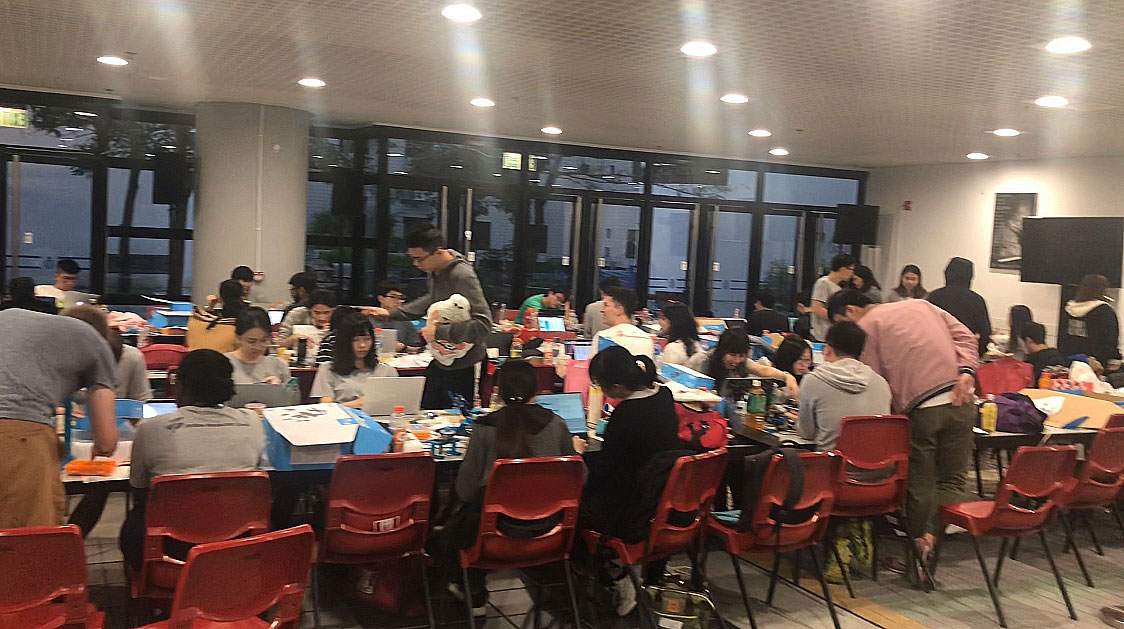
The annual Guangdong‑Hong Kong ICT Youth Entrepreneurship Programme (GD‑HK ICT YEP) entrepreneurship camp concluded successfully on 27‑29 November 2015 at the Guangdong Vocational College of Post and Telecom in Guangzhou. The event, jointly organised by Cyberport Management Limited and the Guangdong Software Industry Association, brought together more than 130 university students from Guangdong and Hong Kong for a three‑day, two‑night training programme.
This event, together with the Shenzhen‑Hong Kong ICT Youth Entrepreneurship Programme (SZ‑HK ICT YEP) camp held in July at the Shenzhen‑Hong Kong Industry‑Academia‑Research Base, is part of Cyberport’s biannual programme for Hong Kong tertiary students. It allows Hong Kong participants to team up with peers from Guangdong and Shenzhen, experience applying for the Cyberport Creative Micro Fund (CCMF), and, if selected, develop a prototype product within six months using a HK$100,000 micro‑grant.
The Center for Entrepreneurship at The Chinese University of Hong Kong was invited to run the training sessions for the Guangdong‑Hong Kong programme. Below I will review the details of the event, hoping to inspire those who wish to join.
When people talk about startup boot camps, one cannot overlook Startup Weekend, the pioneer that later inspired many similar events. For friends in Hong Kong’s startup scene, Startup Weekend is no stranger, having evolved into one of the world’s premier arenas for first‑time founders.
In a brief weekend, a diverse cast of heroes—software and hardware developers, designers, business development specialists, and more—gather together. Within a tight timeframe they form teams and, around a specific theme or challenge, squeeze out a creative solution.
Many attendees of Startup Weekend bring substantial industry experience or entrepreneurial background. When they collaborate, those with technical skills naturally showcase their expertise, while those with startup experience readily share their market insights.
Organising the Guangdong‑Hong Kong ICT Youth Entrepreneurship Camp
To overcome the constraints of time and space and allow participants to learn and get acquainted early, rather than waiting until the first day of the camp, we decided to set up an online learning platform and upload the course materials and basic information about the students for everyone to preview.
After the platform was built, how could we ensure that students would use it for pre‑study and networking? We therefore held an online poll to select the ten most popular campmates. Students earned points based on the likes their learning reflections received online. The poll closed the day before the camp began, and the ten students with the highest scores were chosen.
During the first few days of the camp, we minimized lecture content and focused on group activities that spanned all learning modules. We also incorporated the online poll of the ten most popular campmates, linking WeChat with the online platform to keep students’ interactions close. In this way, participants could reinforce their understanding of the material through activities while also networking with others. Over the three days, they were sure to find like‑minded peers.
However, the three‑day training presented a challenge even more difficult than that faced by Startup Weekend: how to help undergraduate students overcome the lack of industry experience. Once again, we leveraged the benefits of blended learning—combining online and offline instruction—to flexibly manage learning time, location, and methods.
Flexibly Managing Learning Time and Location
First, we divided the curriculum into five domains: Internet of Things and wearable design, fintech, open data, e‑learning, and O2O business models. We uploaded the relevant material to the platform in advance for students to preview. On the second day of training, mentors guided students in identifying key issues within each domain. Students then formed their own groups and attended expert‑led discussion sessions arranged for them. In each domain, the experts shared their entrepreneurial insights, and students had the chance to ask questions. On the final day, each group delivered an elevator‑pitch‑style presentation to showcase what they had learned and to demonstrate their teamwork.
Although this year’s Guangdong‑Hong Kong ICT Youth Entrepreneurship Programme (YEP) camp has concluded, the selection for the Cyberport Creative Micro Fund (CCMF) will take place on 5 January next year at Cyberport. The chosen teams will have six months to develop a prototype, product, or service that will help them expand their business, using the HK$100,000 grant.
For a three‑day entrepreneurship training, learning entrepreneurial skills, finding partners, and reinforcing the entrepreneurial mindset all seem daunting. Yet the combination of online learning and networking with offline, team‑based training allows students to quickly meet, exchange ideas, and learn from one another, giving them an early taste of the startup ecosystem—exactly the goal of student entrepreneurship training. In fact, YEP/CCMF has gradually evolved into a platform, similar to competitions such as Google EYE, STARTLAB.HK, and HKSEC, serving as a springboard for Hong Kong university students and young people to launch ventures. From training to team formation, selection to incubation, it continually injects fresh energy into Hong Kong’s entrepreneurial ecosystem.
Author: Suen Yiu-sin
Published in the Hong Kong Economic Journal, Thursday, 17 December 2015