Engineers Can Become Good Teachers
Article / Photo Source: Hong Kong Design Centre: Unleash! Empowered by Design Thinking
Three Elements of Creating Innovators
“From the lives of the young innovators I have interviewed, I found a common thread that runs through their developmental trajectories: they ignite passion through play, and then find life’s purpose within that.”
— Tony Wagner, world‑renowned innovation‑education expert and author of Creating Innovators
According to Wagner, the three elements—play, passion, and purpose—are not gifts bestowed upon a few by fate; they are behaviors, attitudes, and mindsets that each of us can acquire through education and learning.
For educators dedicated to cultivating the future innovation leaders the world needs, this should be good news. Yet, as Wagner observes, the reality is that innovators have always been rare, and our current education system fails to nurture more of them.
The Challenge of Education
Yat Siu, founder and CEO of Hong Kong tech group Outblaze and a father of three, shares Wagner’s concern that the current education system focuses solely on rote memorization and standardized testing, failing to cultivate the skills society needs.
“I worry that most traditional education systems focus on rote learning, exams, and piles of homework—old methods that stifle creativity—and they do not prepare children for a future dominated by automation, or the Fourth Industrial Revolution.”
Our world is changing so rapidly that skills and professional qualifications once deemed highly marketable are now being questioned. Jobs that many young Hong Kongers aspire to—from registered accounting to finance, law to medicine—are likely to be replaced by artificial intelligence in the near future.
Against this backdrop, how can Hong Kong students, in this disruptive 21st century, learn useful skills while maintaining curiosity and passion for what they study? They need an alternative learning environment—a curriculum rooted in different educational philosophies.
From Tech Professional to Educator
The Dalton Learning Lab was jointly founded in 2017 by Yat Siu and two co‑founders of Dalton School, offering after‑school programs in Science, Technology, Engineering, Arts, and Mathematics (STEAM) for children aged 4 to 13. The lab emphasizes fostering divergent thinking, project‑based learning, digital skills, design thinking, collaboration and teamwork, and interdisciplinary education.
“Outblaze has always been a pioneer. We believe in a blue‑ocean strategy—operating in new markets where growth opportunities are more promising. In recent years, we have seen the mobile‑gaming market become saturated, fiercely competitive, and profit margins declining; it is turning into a red ocean,” explained Outblaze COO Lobson Chan. He joined the company in 2000 and now oversees the lab’s operations. He added, “The STEAM education market is bright, and it offers many synergies with our edutainment software business.”
As seasoned technologists, Yat Siu and Lobson Chan understand the impact of digital disruption and transformation on the future market and the skills it will demand. By collaborating with Dalton School’s co‑founders and other educators, they can combine the best of digital technology and education to influence STEAM learning and the cultivation of 21st‑century skills. Dalton Learning Lab demonstrates that learning can be fun, interactive, and engaging.
Learning, Play, Empathy
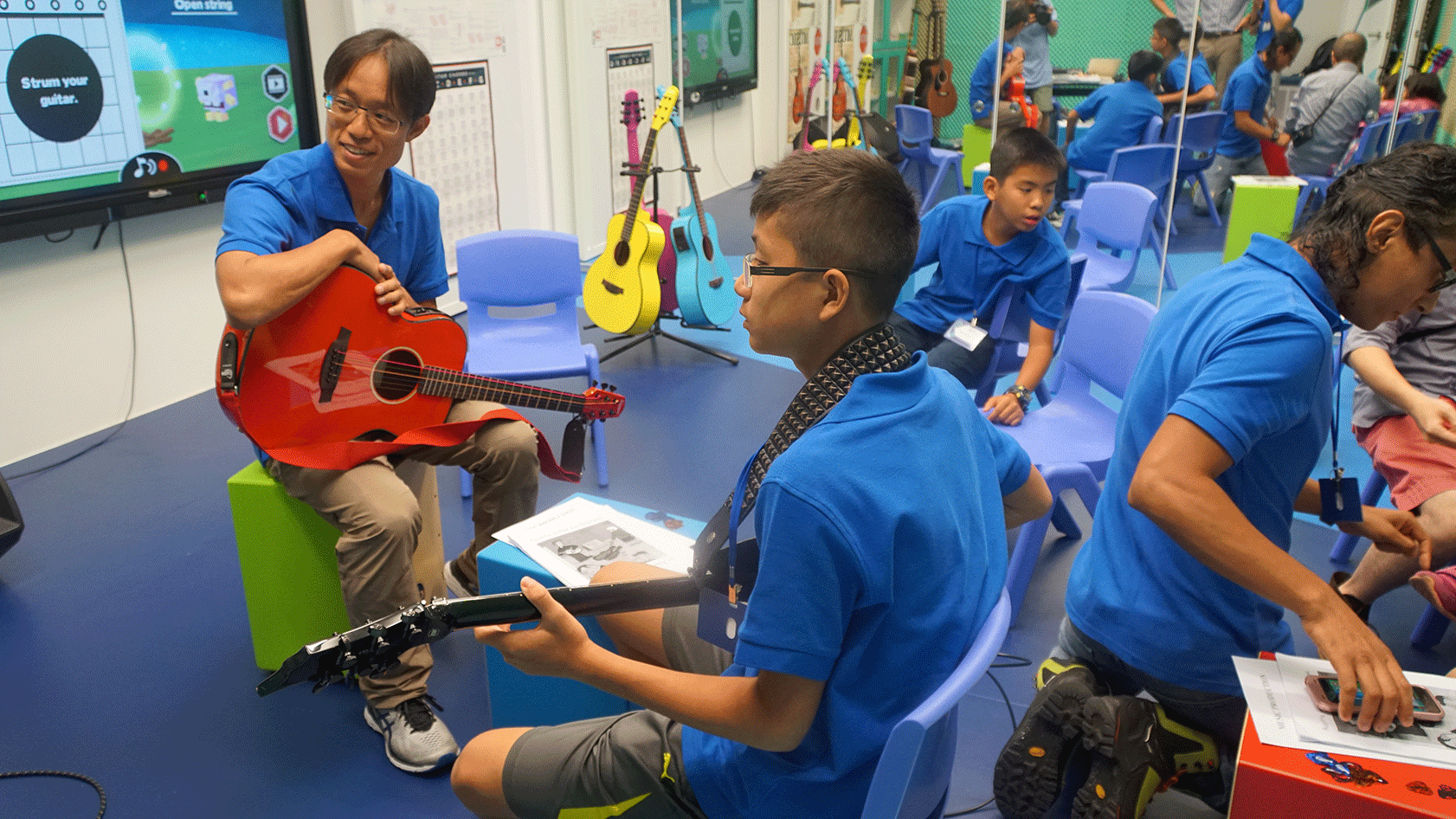
Three years ago, Outblaze had never considered forming a joint venture with Dalton School’s co‑founders or having its engineers serve as tutors for children’s classes. It all began when Outblaze’s management discovered that some features of its edutainment software for children were not well received.
Upon deeper investigation, they found that their young engineers, being single and childless, built software independently without fully understanding the users, lacking the insight needed to meet children’s needs. Outblaze’s management sought new ways to make their engineers more attuned to user needs and emphasized the application of design thinking.
“We hired educational consultants to train our engineers to become teachers, so they could interact more effectively with children and understand their expectations for the software. We also conducted internal design‑thinking training for staff, drawing on techniques from other disciplines. Then we had these trained engineers develop software in the morning and teach children how to use it in the afternoon. When children realized that their teachers were the creators of the software, they found it amazing,” said Lobson Chan.
The smiles on children’s faces, the questions they asked, and their sustained focus demonstrated the product’s appeal. By playing with children and observing their reactions, Outblaze engineers learned how to craft more engaging educational software. This arrangement eventually evolved into the founding of Dalton Learning Lab. Meeting user needs to create better edutainment products and solutions, and making learning fun through play, has become Dalton Learning Lab’s core competitive advantage.
Although it may still be premature to prove Wagner’s claim that “play profoundly influences a child’s life, later transforming into passion and helping them find life’s purpose,” Dalton Learning Lab has already shown us that engineers can become excellent teachers. Design thinking may be one of the secret ingredients!
Reference
- Kylie Knott, “Hong Kong tech guru’s after‑school lab to help children prepare for a robotic future.” Post Magazine, 10 Oct 2017.