
Creative Space Creative Mind
Article / Photo Source: Hong Kong Design Centre: Unleash! Empowered by Design Thinking
Happy Learning: An Impossible Task?
Adults can give children the best gift of all: a joyful childhood. Parents, teachers, the government, and anyone connected to children can do something to make that goal a reality. Our children represent our hope for the future. Unfortunately, the current situation in Hong Kong does not reflect that hope.
A survey conducted by St. Mary’s Hospital from July to December 2018 with 2,038 parents and 18 primary‑school representatives found that 35 % of parents rated the stress their children face as 7 or higher on a 10‑point scale. More than half of parents said their children have to spend two or more hours each day on homework, and 11.5 % said their children need an additional two hours or more to review their books.
No wonder our children are unhappy, and some even hate going to school.
The survey was released in April 2019, and its results also showed that Hong Kong children need more leisure time to do what they want and to relax. They need space to enjoy freedom and explore their creativity.
The Leisure and Cultural Services Department (LCSD) opened a “co‑inclusive playground” to the public in December 2018 at Tuen Mun Park, and that is exactly the kind of space we need.
Public‑Space Development and Design Thinking
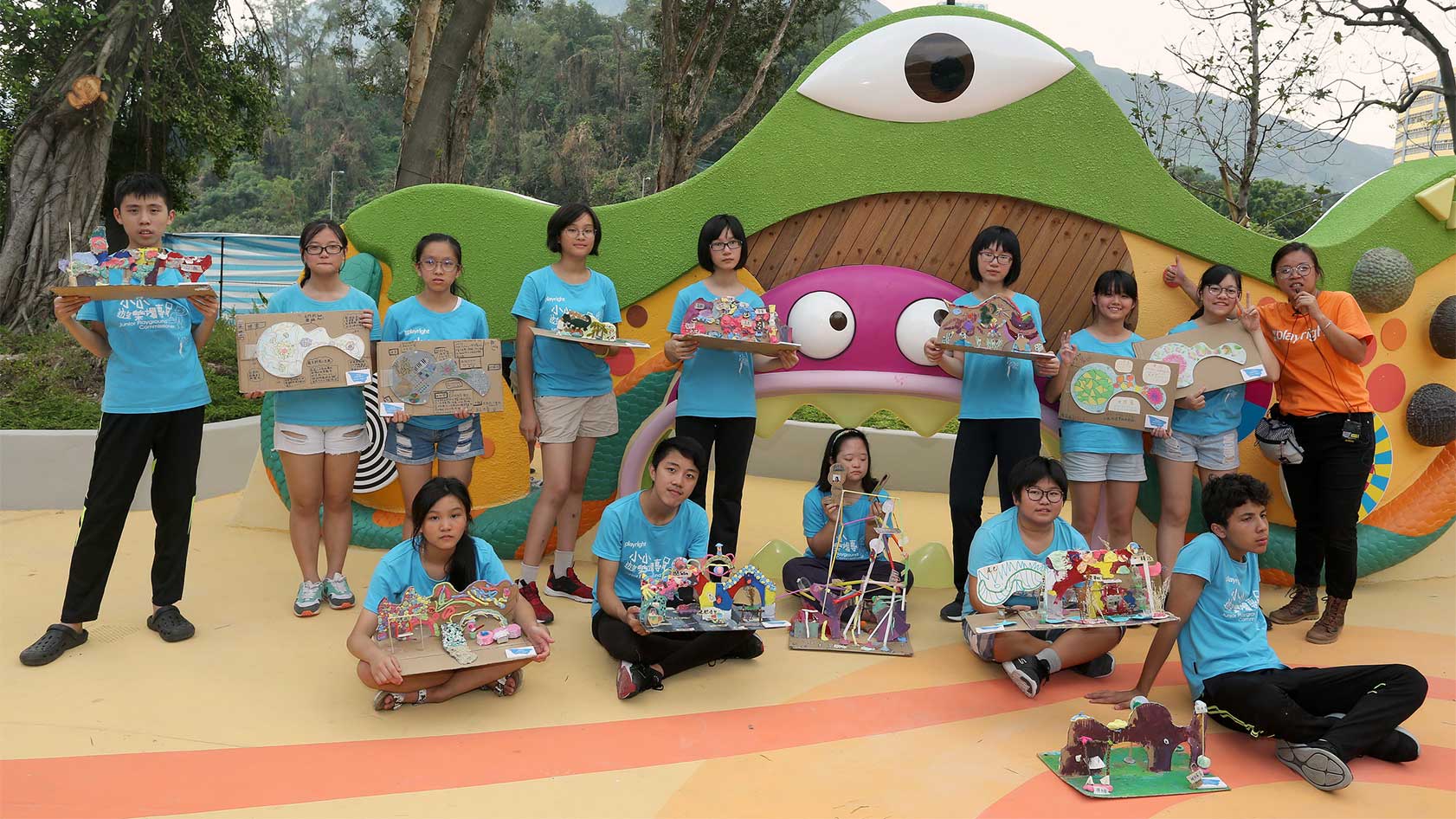
This park is the first to incorporate the natural elements of water and sand into its design, providing barrier‑free and inclusive play facilities for children of all ages and abilities. It is a pilot project jointly undertaken by the LCSD and the Buildings Department, and its design concept originated from the winning entry of the “Inclusive Playground Design Concept Competition.” The competition was jointly organized in 2015 by the Playright Children’s Play Association, the United Nations Children’s Fund (UNICEF) Hong Kong Committee, and the Hong Kong Landscape Architects Society.
“During the design phase we gathered a range of opinions and invited children from the Junior Playground Commissioner Incubation Programme to co‑design,” said Mr. CHAN Ming-cheong, Chief Leisure Affairs Manager of the LCSD. “We also visited various schools, including special‑education schools, to collect students’ feedback,” he added.
The project team adopted a human‑centric design‑thinking approach, taking into account the needs of different users and coordinating the development of the new playground. Within the playground’s various play zones, visitors can find water‑ and sand‑themed areas, rotating swing sets, climbing towers, and special activity installations that incorporate striking and tactile features. These facilities are also suitable for children with disabilities and autism, including a special metal slide for children with cochlear implants, roller‑style and bank‑side slides for other disabled children, and walls, tunnels, and obstacles designed for autistic children. The goal is to allow children of all ages and abilities to enjoy play while learning new skills.
In addition to child‑only facilities, the park also offers play equipment that parents can use with their children. For example, parents can swing side‑by‑side with their children on a parent‑child swing.
Bringing Learning Back to Its Place
Sir Ken Robinson, a world‑renowned education and creativity expert, writes in his book “The Element: How Finding Your Passion Changes Everything” that “the truth is, in the face of the challenges we confront, we do not need to reform the education system; we need to transform it entirely. The key is not how to standardise education, but how to personalise it, to uncover each child’s unique talents, and to place students in an environment where they can embrace learning and naturally discover what they love.”
Perhaps we can all learn something from his words: schools are places where people can experience the joy of learning, and education is the process by which they explore their creative potential.