
The Design Thinking Journey of Innopage
21st‑Century Talent That Can Overcome “Wicked Problems”
The question “What are the skills of the 21st century?” has not only drawn the attention of educators and parents, but also that of governments and business leaders worldwide. They are grappling with how to identify, recruit, retain, and nurture the next generation of talent so that they can navigate turbulent times.
In the next decade, our world will become increasingly complex and uncertain. Leaders across industries and sectors must tackle systemic “wicked problems” that are ambiguous, vague, and even contradictory, exceeding the scope and scale of traditional disciplines. Companies need interdisciplinary, cross‑boundary talent to build innovative and flexible organizational structures and solutions that drive comprehensive transformation.
Design is Not Decoration; It Is a Way of Thinking
Keith Li , Innopage’s CEOs and co-founder, is acutely aware of these challenges. Although the company has repeatedly won awards for information and communication technology and mobile applications, Li learned the importance of building cross‑disciplinary teams through painful experience. As a subcontractor for many design and advertising firms, Li’s team often struggled with the flashy user experience and user interface (UX/UI) designs handed down by the lead contractors. The designers’ sole goal was to create a super‑cool “wow” effect in line with their own design style. Innopage’s responsibility was to ensure that the design could operate across different systems and hardware and run on mobile devices. Because designs rarely accounted for the host system’s technical guidelines and best UI practices, the original designs were hard to use and difficult to adjust. Li’s team ultimately had to spend a great deal of extra time overcoming hardware and software constraints to deliver the product the designers wanted. Yet the real question remained unanswered: Is this the product users actually want?
When clients later realized that the product failed to meet user needs and to align with their business’s hardware and operating‑system upgrade and maintenance requirements, they asked Innopage to return to the basics—designing with simplicity, usability, and maintainability in mind. This process circled back to the starting point, wasting time and resources that could have been avoided. If every team member had recognized that integrating user experience, technical constraints, and business needs is essential to building high‑quality products that satisfy users, the outcome would have been entirely different, and the product would have been more satisfying.
Li realized that good design determines a product’s quality, so he placed great emphasis on user experience and interface early in the development process. He did not treat design as a post‑hoc aesthetic tweak but made user experience one of Innopage’s core competitive advantages. For Innopage, “design is not decoration; it is a way of thinking.”
Human‑Centric Cross‑Functional Design Teams
“Innopage has been producing mobile apps for clients for many years, experiencing both successes and failures. The hard lessons we learned in development taught us that a good product should be people‑centric, not technology‑centric,” he said. To ensure the team could embody this people‑first philosophy, Li hired designers with design thinking and programming knowledge, as well as talent highly attuned to technical constraints and business needs. By collaborating on new projects with these new colleagues, existing technical staff also benefited, bringing more excellent designs and products to the company.
A Successful Example of Innopage’s Cross‑Functional Team
Innopage improved a mobile app for a client’s maternity service. The team interviewed doctors, nurses, and expectant mothers and discovered that the original product had overlooked a key feature: how to place the photo‑album button on the screen. One of the app’s main functions is to allow pregnant women to capture and store memorable moments during pregnancy for later recollection and sharing. However, this feature was not obvious to users. Consequently, the Innopage team addressed the issue by redesigning the interface to highlight this important function.
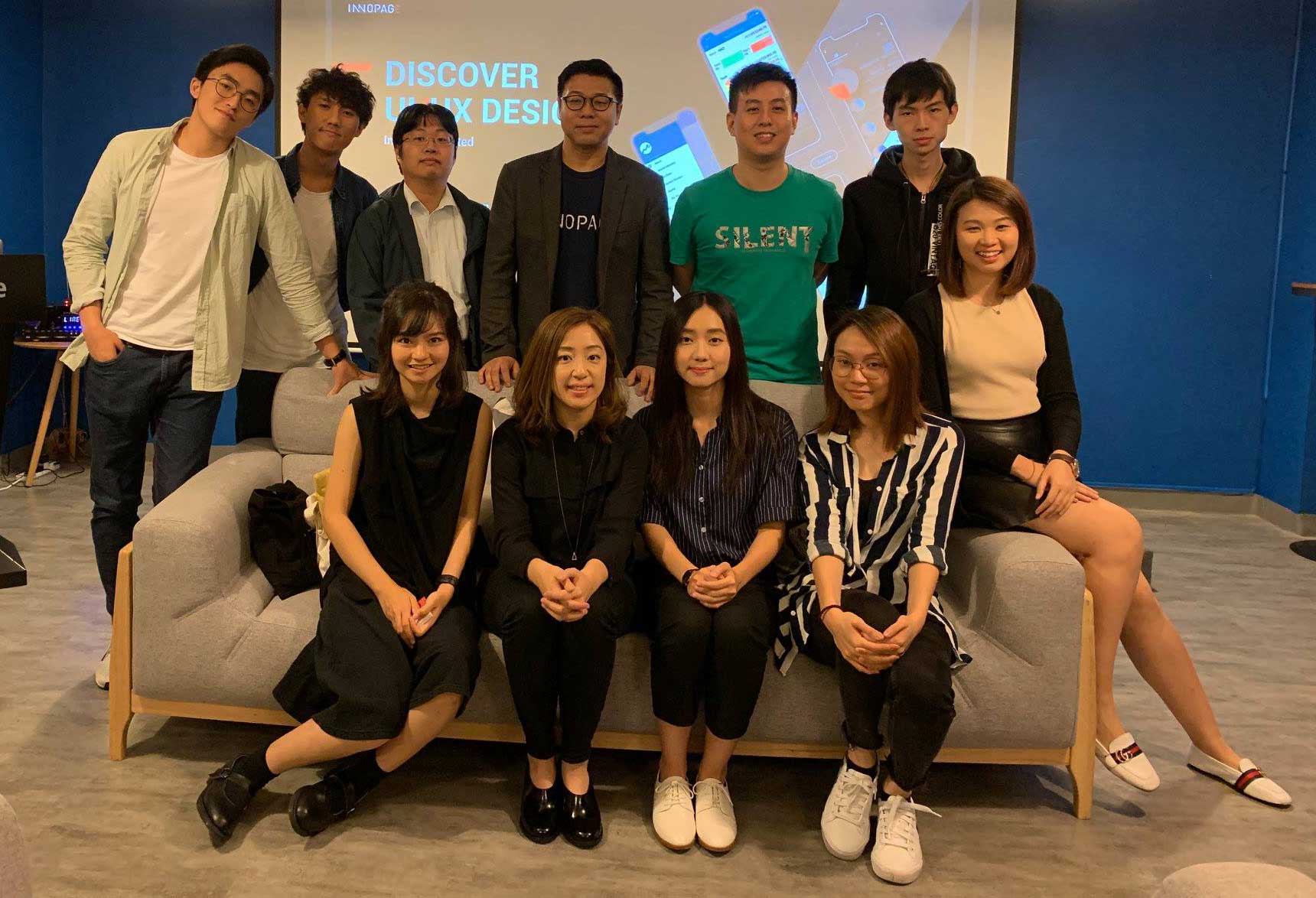
Innopage is convinced that the right way to build mobile apps is to think from the user’s perspective and understand their needs. To raise public awareness of excellent user experience and interface design, Innopage also hosts workshops to help participants understand this topic.
Article/Photo source: Hong Kong Design Centre: Unleash! Empowered by Design Thinking